

The Assistant’s Playbook: Becoming the G.O.A.T. Your Executive Can’t Live Without
- Crystal Marshall

- Sep 30, 2025
- 6 min read
Updated: Oct 7, 2025
You Are Already Valuable — Now It’s Time to Show It

Let’s get one thing straight: assistants are not optional — they’re essential. If you are an Executive Assistant, Personal Assistant, or Chief of Staff, you are the heartbeat of the operation. You are the one turning chaos into order, anticipating fires before they spark, and making sure your leader walks into every room prepared. Whether anyone says “thank you” or not, your value is undeniable.
And for the leaders reading this — entrepreneurs, C-Suite executives, celebrities, and talent — take note: your assistant is more than a scheduler or errand-runner. They are your gatekeeper and strategic partner. When you trust them, empower them, and give them room to grow, you don’t just get “support.” You get someone who protects your brand, your reputation, and your time.
For the assistants, here’s the shift: don’t wait for applause. Create it. Position yourself as indispensable by owning your excellence out loud. To be elite, you’ve got to sharpen your skill sets, build the right characteristics, and yes — toot your own horn (professionally and strategically). Because when you do, people stop seeing you as “the help” and start recognizing you as the leader you already are.
This isn’t about ego. It’s about positioning. The assistants who rise are the ones who know their worth, showcase it, and keep building their toolkit so no one can deny their impact.
So let’s dig in. Here are five pillars that will transform how you show up in your role — whether you’re supporting a celebrity, a CEO, or high-profile talent.
Communicate Like a Leader, Not a Messenger
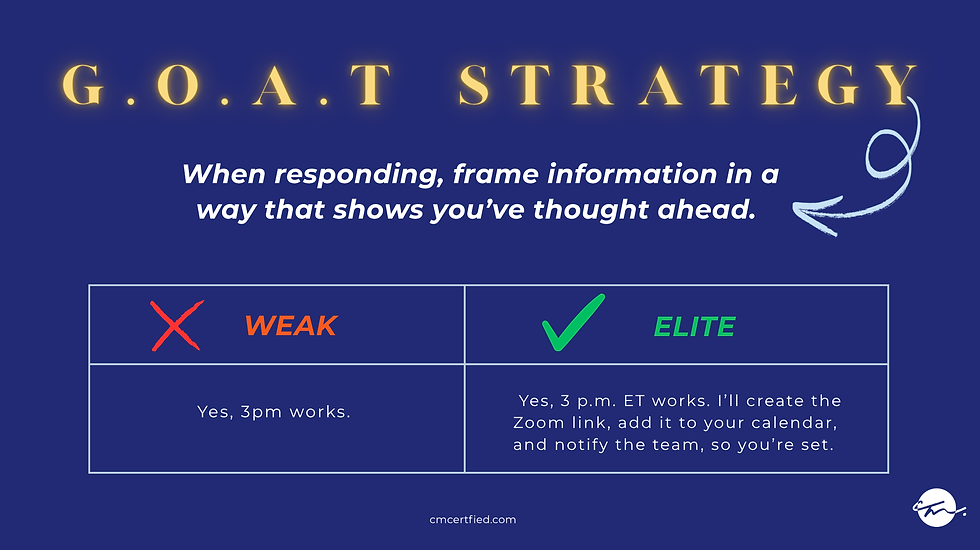
Here’s the truth: average assistants relay information. Elite assistants lead with it.
Too many EAs/PAs get stuck being the “middleman.” You forward the email, pass along the text, or book the call. But the real power is in how you communicate. Your words either build trust and authority — or they make you invisible.
Practical ways to communicate like a leader:
Be concise, warm, and professional. Nobody has time for long-winded essays. But a cold, one-word answer? That undercuts your value. Find the middle: short, clear, yet personable.
Anticipate what they’ll need to know before they even ask. Don’t just answer the question — answer the next three.
Read between the lines. Many executives, celebrities, and talent aren’t great communicators. That’s where you come in. Interpret tone, context, and what’s left unsaid.
2. Assistant Mastery: Know Your Boss Like You Know Yourself
Here’s where assistants transform from good to G.O.A.T.: they know their boss inside and out.
When I say “know your boss,” I don’t mean you can recite their LinkedIn profile. I mean you understand their rhythms, moods, and quirks like you know your own reflection. Their go-to coffee order. Their shoe size. Their least favorite airline seat. The subtle shift in their voice that tells you a storm is brewing. The family birthdays they’d forget without you.
Why? Because the more you know, the more you can anticipate instead of react.
My former boss at BET Media Group and a 2023 Advertising Hall of Famer, used to tell me: “Manage my expectations." That was code for: don’t let me be blindsided. Keep me in the loop and aware. Don’t put me in a position of wondering.
And the only way I could do that? By knowing him better than anyone else. Once I understood not just his needs but his rhythms, I could stay three steps ahead.
How to get there:
Observe relentlessly. Notice their patterns. What drains them? What excites them?
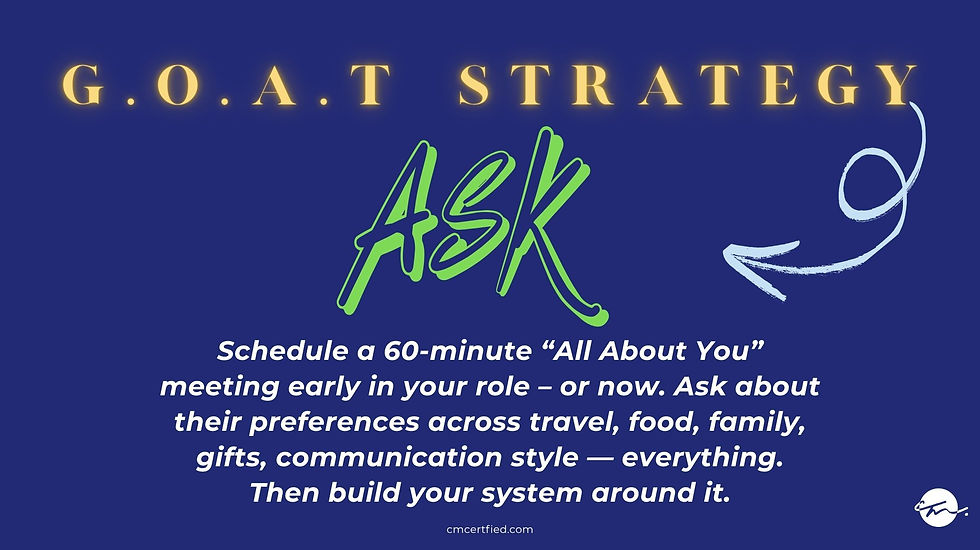
Ask smart questions. Don’t be afraid to say, “What do you prefer?” or “How do you want me to handle this in the future?”
Keep notes. Write it all down — coffee orders, hotel preferences, the fact that they hate connecting flights. Create your own “boss playbook.”
3. Follow Up and Follow Through Like Your Reputation Depends on It (Because It Does)
Listen, if there’s one thing that separates assistants who fade into the background from those who get promoted, it’s this: they follow up and follow through like clockwork.
Being dependable is non-negotiable. People may forgive you for not having an immediate answer, but if you say you’ll do something and you don’t? That sticks.
Here’s how to build a bulletproof reputation:
Always set deadlines — and pad them. If you need something by Friday, set the deadline for Wednesday. Give yourself margin for the inevitable chaos.
Circle back before anyone has to chase you. When you initiate the follow-up, you send a message: I’ve got this under control.
Check in before problems have a chance to erupt. A five-minute “just checking” email can prevent a five-hour crisis later.

Carry Energy That Calms the Room
Never underestimate the power of your presence. Your energy either adds fuel to the fire or calms the storm.
In high-stakes environments — whether backstage at an awards show, in the C-suite before a board meeting, or on a 2 a.m. travel day — people feed off of your energy. If you’re frantic, they’ll be frantic. If you’re calm, they’ll trust the process.
Here’s how to cultivate that steady energy:
Smile — yes, people can hear it through the phone. It’s science.
Walk the room. Be approachable, check in, make people feel seen.
Ground yourself. Do whatever you need to internally — pray, breathe, repeat a mantra — so externally you serve as the rock in the middle of the storm.

Stop Playing Small: You Are Already a Leader
Here’s the truth nobody tells assistants: you don’t need a title to lead.
Every time you protect your boss’s calendar, you’re leading. Every time you put out a fire without anyone knowing, you’re leading. Every time you anticipate a need before it becomes a crisis, you’re leading.
The problem? Too many assistants downplay their role. They see themselves as “just support.”
No. You are a strategic partner. And when you step into that mindset, everything shifts. You build influence. You earn respect. You stop chasing acknowledgment and start commanding it.

My Challenge to You
The next time you feel overlooked, remind yourself: if you disappeared tomorrow, the entire operation would shake in some way. You are the one holding it all together. That’s not invisible. That’s invaluable. Friendly Reminder: This isn’t about ego. It’s about confidence, value, purpose, living in the now, and support. The best assistants know they don’t have to prove their worth with arrogance — they prove it by showing up fully, consistently, and with intention.
And the world needs you to lean into that power.
So, here’s my challenge:
Stop waiting for applause.
Build your confidence.
Sharpen your systems.
Communicate with authority and precision.
Position yourself as the indispensable G.O.A.T. you already are.
Because one day, when the right leader is paying attention, they’ll realize what the real ones already know: without you, they’d be toast.

Final Word
I’ve been where you are. I know what it feels like to give everything you have and still wonder if people see the value you bring. That’s exactly why I created Crystal Marshall Certified — to remind assistants that their work matters and to give them the tools to shine even brighter.

I don’t just teach assistants how to check tasks off a list. I teach you how to step confidently into your role, anticipate with ease, and build a reputation that earns respect and trust.
You’re not “just support.” You’re a leader in your own right, and every action you take has an impact. When you embrace that truth, everything shifts — not only for the people you serve, but for your own growth and legacy.
Together, let's continue working towards being an elite and indispensable asset.


This was a really good read with tips that will enhance and role you fulfill.
This is an amazing article! I really love how you included a helpful tip with each example you shared.